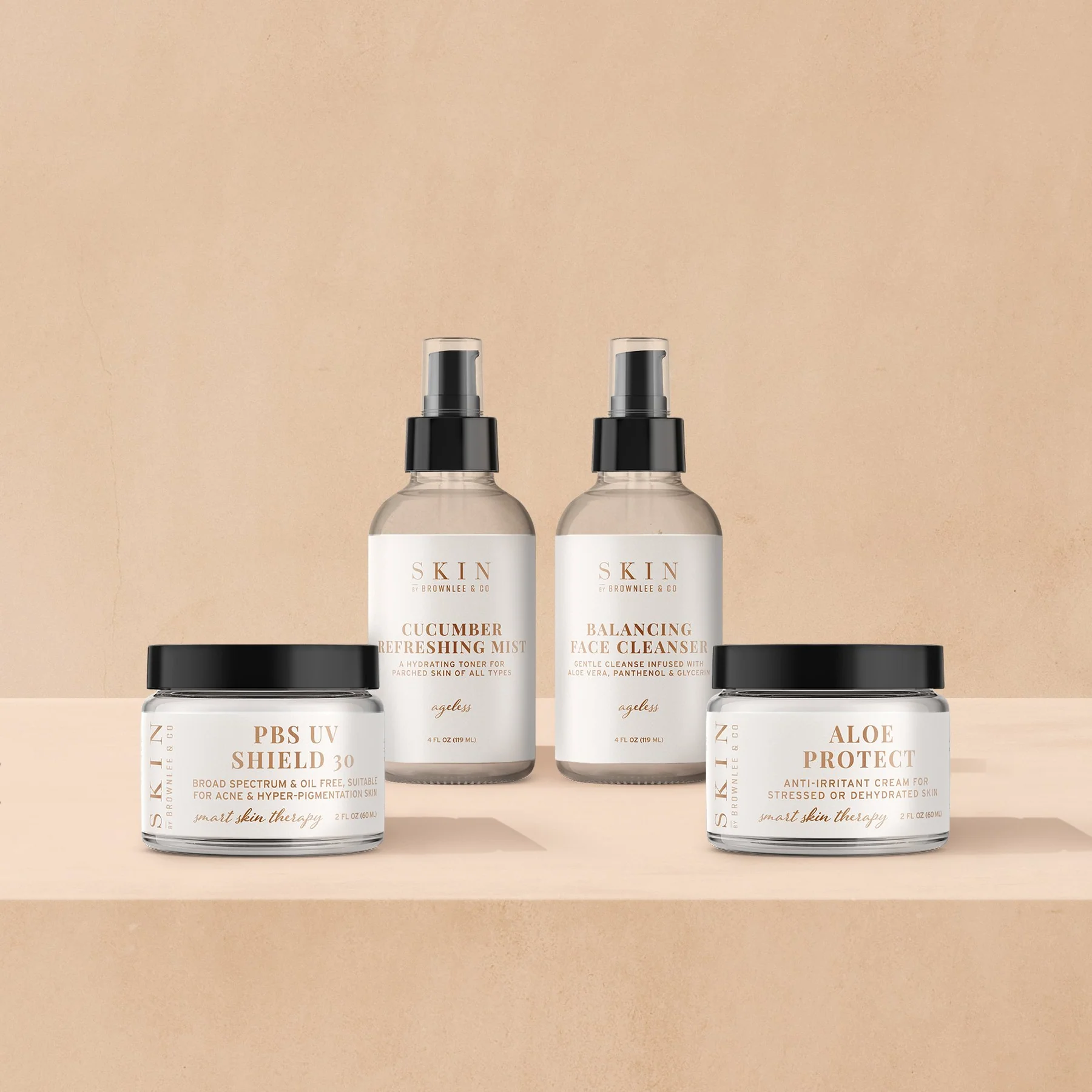
Launching a Skincare Brand on a Tight Budget: Should You Start With One Hero Product or a Mini Collection?
You do NOT need a 10-product skincare line to start a beauty brand.
Actually, if your budget is tight, trying to launch a full collection might be one of the fastest ways to run out of money before your customers even know you exist.
You don’t need:
10 formulas.
10 different bottles.
10 labels.
10 sets of product photography.
10 products sitting on a shelf waiting to be sold.
You need a smart starting point.
And for some founders, that means one hero product.
For others, it means a small collection that makes sense together.
Let’s talk about both.
Option 1: Start With One Hero Product
A hero product is the product you want your brand to become known for.
Think:
“This is our thing.”
It could be:
- A body lotion
- A facial cleanser
- A body oil
- A hair treatment
- A lip product
- A sunscreen
- A scalp product
The advantage is simple.
Your money is concentrated.
Instead of splitting your budget across five or six products, you can put more into making one product, packaging it well and actually marketing it.
You can learn:
- Who buys it
- Who doesn’t
- What customers like
- What they complain about
- Whether they repurchase
- Whether your price works
Then you use what you learn to decide what comes next.
That is a very sensible way to build a brand.
But What If You Want More Than One Product?
This is where a mini collection can make sense.
You don’t necessarily need to launch one lonely product.
You can launch a small group of products that naturally belong together.
For example:
Bath & Body
Bathing Gel + Body Lotion
Simple.
The customer can cleanse and moisturize using two products from the same brand.
Face Care
Face Cleanser + Moisturizer
Again, simple.
You have created a basic routine rather than asking your customer to figure out how five different products fit together.
Hair Care
Shampoo + Conditioner
A very natural pairing.
Hand Care
Handwashing Gel + Hand Cream
This could work particularly well for a brand focused on everyday self-care.
Lip Care
Lip Balm + Lip Scrub
Or, if you’re taking a more makeup-focused route:
Lip Gloss + Lip Pencil
The point isn’t to have lots of products.
The point is to have products that make sense together.
And Here’s Where It Gets Interesting
You can actually start with a mini collection without manufacturing everything from scratch.
This is where private label and bulk purchasing can make the entry point more accessible for some founders.
For example, you could work with a manufacturer offering suitable ready-developed formulas.
You select the products that fit your brand.
You choose your packaging.
You develop your brand identity.
You purchase your approved products.
Then the products are filled, labelled and prepared for sale according to the applicable manufacturing and regulatory requirements.
And suddenly, you have a real product line.
You don’t necessarily need to spend months developing ten completely new formulas.
But Please Don’t Read “Private Label” as “Cheap and Easy”
This is where I need to stop you.
Private label can reduce the complexity and cost of product development.
It does not remove your responsibility to build a proper brand.
You still need to think about:
- Product quality
- Packaging
- Labelling
- Regulatory compliance
- Pricing
- Minimum order quantities
- Marketing
- Customer experience
- Inventory management
And, depending on the arrangement, you also need to understand exactly what you are buying.
Is it an existing formula?
Can it be customized?
Who owns the formula?
Who is responsible for manufacturing?
Who handles regulatory requirements?
What happens if you want to scale?
These are questions worth answering before you place an order.
The “Buy It, Put My Label On It” Mentality Can Get You Into Trouble
I know the process can sound very simple:
Choose product → buy in bulk → get containers → fill → label → sell.
But cosmetics are regulated products.
You cannot simply buy an unregistered bulk product, pour it into your own bottles, print a label and assume you’re ready to sell.
There are regulatory and manufacturing requirements that need to be addressed before the product reaches the public.
So yes, private label can be a smart entry strategy.
But it needs to be done properly.
So Which Should You Choose?
Here’s my simple rule.
Choose a hero product if:
- Your budget is very limited
- You have a very specific customer problem
- You want to test the market first
- You are confident about your product positioning
- You want to concentrate your marketing efforts
Consider a mini collection if:
- Your products naturally work together
- You have enough capital for initial inventory
- You want to offer a simple routine
- Your target customer is likely to buy multiple products
- You can realistically market the whole collection
The mistake is thinking:
“A bigger collection means a bigger brand.”
It doesn’t.
A bigger collection simply means you have more products.
A strong brand is built through good products, clear positioning, customer trust and repeat purchases.
Here’s a Simple Example
Let’s say you want to build a body care brand.
You have a limited budget.
Instead of launching:
- Body wash
- Body scrub
- Body lotion
- Body butter
- Body oil
- Hand cream
- Foot cream
- Body mist
You could start with:
Bathing Gel + Body Lotion
That’s it.
Build the brand around that.
Get people using it.
Collect feedback.
Create content around the products.
Build your customer base.
Then later introduce the scrub.
Then the body oil.
Then the body mist.
Your range grows with your business.
Your Brand Doesn’t Have to Be Finished on Launch Day
This is probably the most important thing I want you to take away.
Your first launch is not the final version of your brand.
It is version one.
You can start with two products.
Then three.
Then five.
Then eventually have an entire collection.
The goal isn’t to look like a giant beauty company on day one.
The goal is to build something people actually want to buy again.
So, What Would I Do With a Tight Budget?
I’d first ask:
What is the customer problem I’m solving?
Then:
What is the smallest collection that can solve that problem well?
If the answer is one product, start with one.
If two products naturally belong together, start with two.
If three products create a simple routine and your numbers support it, start with three.
Don’t spend your entire budget trying to make your launch look impressive.
Leave money to actually sell the products.
Because a warehouse full of beautiful products is not a successful skincare brand.
Customers are.
And Yes, You Can Start Small
Private label can be one route for founders who want to enter the market without developing every formula from scratch.
You can select suitable products, work with a manufacturer, choose your packaging and build your own brand around them.
The important part is doing it within the appropriate manufacturing and regulatory framework.
At Lueur Cosmetics Lab, we work with brands at different stages, from founders who are still trying to decide what to launch to businesses ready for custom formulation, private label or larger-scale manufacturing.
So if you’ve been sitting there thinking:
“I want to start a skincare brand, but I don’t have enough money to create a huge collection.”
Maybe you don’t need a huge collection.
Maybe you just need a smart first one.