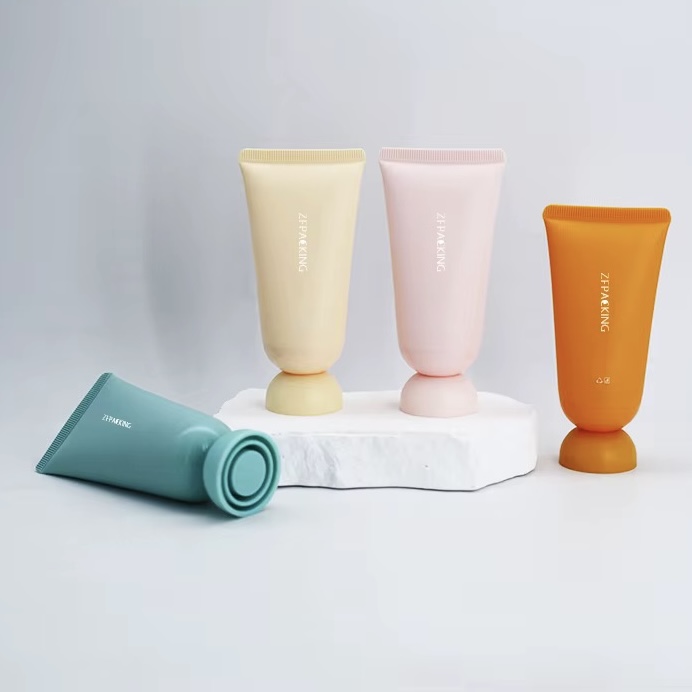
Plastic Is Not Just Plastic: How Your Packaging Can Affect Your Skincare Product
You spent months developing your skincare formula. Then you put it in the cheapest bottle you could find.
Yes, I said it.
Because one of the things I see people underestimate when developing skincare products is packaging.
A bottle is not just a bottle.
The material you choose can affect how your product is protected, stored, dispensed, and maintained throughout its shelf life.
And no, this does not mean that one plastic is automatically better than another.
It means you need to choose the right packaging for the formula.
So, what are the common plastics used for skincare packaging?
You will commonly come across materials such as:
- PET
- HDPE
- LDPE
- PP
- PVC
You may also see products packaged in acrylic, glass, aluminium, or combinations of different materials.
Each has different physical and chemical properties.
Let’s look at some of the plastics you are most likely to encounter.
1. PET: Clear, attractive and commonly used
PET, or polyethylene terephthalate, is popular for skincare packaging because it can be clear, lightweight, strong, and relatively rigid.
This makes it attractive for products where you want the customer to see the product.
You will often see PET used for:
- Cleansers
- Toners
- Body washes
- Some serums
- Haircare products
- Oils
But here is the part people forget:
Clear packaging allows light in.
So even if PET itself is suitable for a particular formula, the transparency of the package may not be ideal for a light-sensitive product.
Sometimes the problem is not simply the plastic material. It is the entire packaging system and how well it protects the formula.
2. HDPE: The workhorse
HDPE, or high-density polyethylene, is a popular choice for cosmetic packaging because it is relatively rigid and durable.
It is commonly used for:
- Shampoos
- Conditioners
- Body lotions
- Body washes
- Cleansers
- Larger-volume products
One advantage is that HDPE containers are generally opaque or translucent rather than completely clear, depending on how they are manufactured.
That can be useful when you want to reduce the amount of light reaching a formula.
But again, don’t choose HDPE simply because someone told you it is “the best plastic.”
Your formulation still matters.
3. LDPE: Flexible packaging
LDPE, or low-density polyethylene, is softer and more flexible than HDPE.
You may see it in:
- Squeeze tubes
- Flexible bottles
- Pouches
- Some creams and gels
The flexibility can be useful when the product needs to be squeezed out rather than pumped.
But the flexibility of the container also changes the user experience and the way the product interacts with the package during use.
4. PP: Strong and versatile
PP, or polypropylene, is another very common material in cosmetics.
You can find it in:
- Jars
- Caps
- Closures
- Pumps and packaging components
- Tubes
- Some bottles
PP is particularly useful because it can tolerate a range of formulation and processing conditions.
But again, there is no universal rule that says:
“PP means your product is safe.”
Packaging selection is a compatibility question.
5. PVC: Should you automatically avoid it?
This is where things get interesting.
You may hear people say:
“PVC is toxic. Never use PVC for cosmetics.”
That is far too simplistic.
The safety of a packaging material depends on its composition, additives, manufacturing, intended use, and interaction with the product.
So the question should not simply be:
“Is this plastic good or bad?”
The better question is:
“Is this packaging appropriate for this particular formulation?”
That is how a cosmetic scientist should think about packaging.
The Formula and the Plastic Have a Relationship
This is the part many new skincare brands don’t think about.
Your product is sitting inside that package for months.
So you need to consider whether the packaging is compatible with the formula.
For example, certain formulations may interact differently with packaging because of:
- Oils
- Solvents
- Fragrance materials
- Alcohol
- Surfactants
- Acids
- Essential oils
- High or low pH
- UV-sensitive ingredients
Packaging can also affect the product through factors such as oxygen, moisture, light exposure and the way the product is dispensed.
This is why packaging compatibility should be considered during product development rather than after you have already printed 5,000 bottles.
And yes, packaging can contribute to product problems
A cosmetic product can become contaminated because of poor manufacturing, raw materials, storage conditions, or packaging that does not adequately protect the product. The FDA specifically identifies inadequate packaging as one possible contributor to microbial contamination. (U.S. Food and Drug Administration)
Packaging can also influence how a product changes over time.
Heat, light, air and moisture can contribute to changes in cosmetic products, including changes in colour, texture and smell. (U.S. Food and Drug Administration)
So when we talk about stability, we shouldn’t only be asking:
“Is my formula stable?”
We should also ask:
“Is my formula stable in this package?”
Those are two different questions.
What About Plastic Leaching?
This is another topic that scares people.
You may have seen posts claiming that skincare products in plastic containers are “leaching toxins into your skin.”
Again, let’s slow down.
The fact that a product is packaged in plastic does not automatically mean that harmful substances are migrating into the product.
Packaging materials are designed with specific properties and uses, and the actual risk depends on the material, formulation, contact conditions, temperature, duration and other factors.
That is why proper packaging evaluation matters.
The goal is not to panic about plastic.
The goal is to choose packaging based on evidence and compatibility.
So Which Plastic Should You Use?
Here is the answer people don’t usually want:
It depends.
A cleanser, vitamin C serum, body lotion, hair conditioner and an anhydrous oil do not necessarily need the same packaging.
Your decision should consider:
The formulation
What is in the product?
The product’s sensitivity
Is it sensitive to light, oxygen, moisture or temperature?
The viscosity
Is it a thin liquid, gel, cream, butter or thick balm?
The dispensing system
Does it need a pump, dropper, spray, squeeze tube or jar?
The expected shelf life
How long will the product sit in the package before it reaches the consumer and is finished?
The environment
What conditions will the product experience during transportation, storage and use?
This becomes especially important in hot climates and during long-distance transportation.
The Biggest Packaging Mistake New Brands Make
They choose packaging based entirely on aesthetics.
And I understand why.
You want the beautiful bottle.
You want the frosted finish.
You want the luxury jar.
You want the packaging to look expensive.
But your packaging has a job beyond looking good.
It has to protect the product and deliver it properly to the consumer.
The most beautiful bottle in the world is a poor packaging choice if it compromises the product.
So before you order 5,000 pieces…
Ask these questions:
Is the material compatible with my formulation?
Will it protect the product from light, air and moisture where necessary?
Will the dispensing system work with the viscosity of the product?
Will the packaging continue to perform throughout the intended shelf life?
Has the final product been evaluated in its actual packaging?
These questions can save you a lot of money.
Because changing your packaging before production is inconvenient.
Changing it after you have manufactured thousands of units is expensive.
The Bottom Line
Plastic is not simply “good” or “bad.”
PET is not automatically better than HDPE.
HDPE is not automatically better than PP.
And expensive packaging is not automatically better packaging.
The right packaging is the one that works with your formulation, not against it.
That is why packaging selection should be part of product development from the beginning.
If you are developing a skincare or haircare product and you are unsure which packaging is appropriate for your formulation, this is something that should be assessed before you commit to your final packaging order.
At Lueur Cosmetics Lab, we don’t look at the formula and packaging as two completely separate decisions. We consider how the product is formulated, manufactured, packaged and ultimately brought to market.
Because your formula deserves more than a pretty bottle.